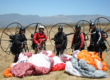
Safety is one of the first things people ask about when they discover paramotoring. Is paramotoring safe? How dangerous is it compared to other forms of aviation? These are important questions, and the honest answer is that paramotoring — like any form of flight — carries inherent risks. However, with proper training, good judgment, and regular equipment maintenance, paramotoring is widely considered one of the safest forms of personal aviation available today.
Paramotoring Safety Statistics
When people ask “is paramotoring dangerous,” it helps to put the numbers in context. According to data tracked by the United States Powered Paragliding Association (USPPA), the rate of serious incidents in paramotoring is remarkably low when compared to other forms of aviation and even many common recreational activities.
General aviation — including private pilot flying in small aircraft — has a significantly higher accident rate per flight hour than paramotoring. Skydiving, hang gliding, and even motorcycling all carry statistically higher risks. The relatively slow flight speeds of a paramotor (typically 25 to 35 miles per hour), combined with the ability to land in almost any open area, contribute to the sport’s favorable safety profile.
That said, the vast majority of paramotor incidents can be traced back to one of three causes: inadequate training, poor weather judgment, or equipment neglect. All three of these are within the pilot’s control, which means that safety in paramotoring largely comes down to the decisions you make as a pilot.
The Importance of Certified Training
The single most effective way to stay safe in paramotoring is to invest in professional, certified training before you fly. While paramotoring does not legally require a pilot’s license under FAR Part 103, skipping professional training dramatically increases your risk of injury or accident.
A quality training program covers essential skills including ground handling, launch techniques, in-flight maneuvering, landing approaches, emergency procedures, and weather assessment. At Lone Star Paramotor, our beginner training is led by USPPA and ASC certified instructors who prioritize safety at every stage of instruction.
USPPA certification means your instructor has met rigorous standards for teaching ability, flight experience, and safety knowledge. When choosing a training program, always verify that the school and its instructors hold current USPPA certification. This is the gold standard for paramotor instruction in the United States and your best assurance of receiving thorough, safety-focused education.
Weather Awareness and Decision Making
Understanding weather is critical to safe paramotoring. Wind speed, turbulence, thermal activity, and precipitation all affect flight safety. Experienced paramotor pilots know that choosing not to fly when conditions are marginal is one of the most important safety decisions they can make.
Most paramotor flying is done in the early morning or late evening hours when winds are typically calm and the air is smooth. Flying in strong winds, gusty conditions, or near thunderstorms is extremely dangerous and should always be avoided. A good training program will teach you how to read weather forecasts, assess conditions on the ground, and make conservative go or no-go decisions.
Equipment Inspection and Maintenance
Regular equipment inspection is another cornerstone of paramotor safety. Before every flight, a responsible pilot performs a thorough preflight check of their wing, lines, harness, motor, propeller, and fuel system. This simple habit takes only a few minutes and can prevent many types of mechanical or structural failures.
Wings should be inspected for tears, worn lines, and porosity, and should be replaced according to the manufacturer’s recommended lifespan. Engines require routine maintenance including spark plug checks, air filter cleaning, and regular oil changes for four-stroke motors. Propellers should be inspected for cracks or chips before each flight.
Fly Safe with Lone Star Paramotor
At Lone Star Paramotor, safety is the foundation of everything we do. Our USPPA and ASC certified instructors bring years of flying and teaching experience to every training session. We believe that well-trained, well-informed pilots are safe pilots, and our beginner training program is designed to give you the knowledge and skills you need to fly with confidence.
Ready to start your journey into paramotoring the right way? Enroll in our Beginner Pilot Training program or experience flight firsthand with a Discovery Flight. Your safety is our top priority, and we’re here to help you become a skilled, confident paramotor pilot.